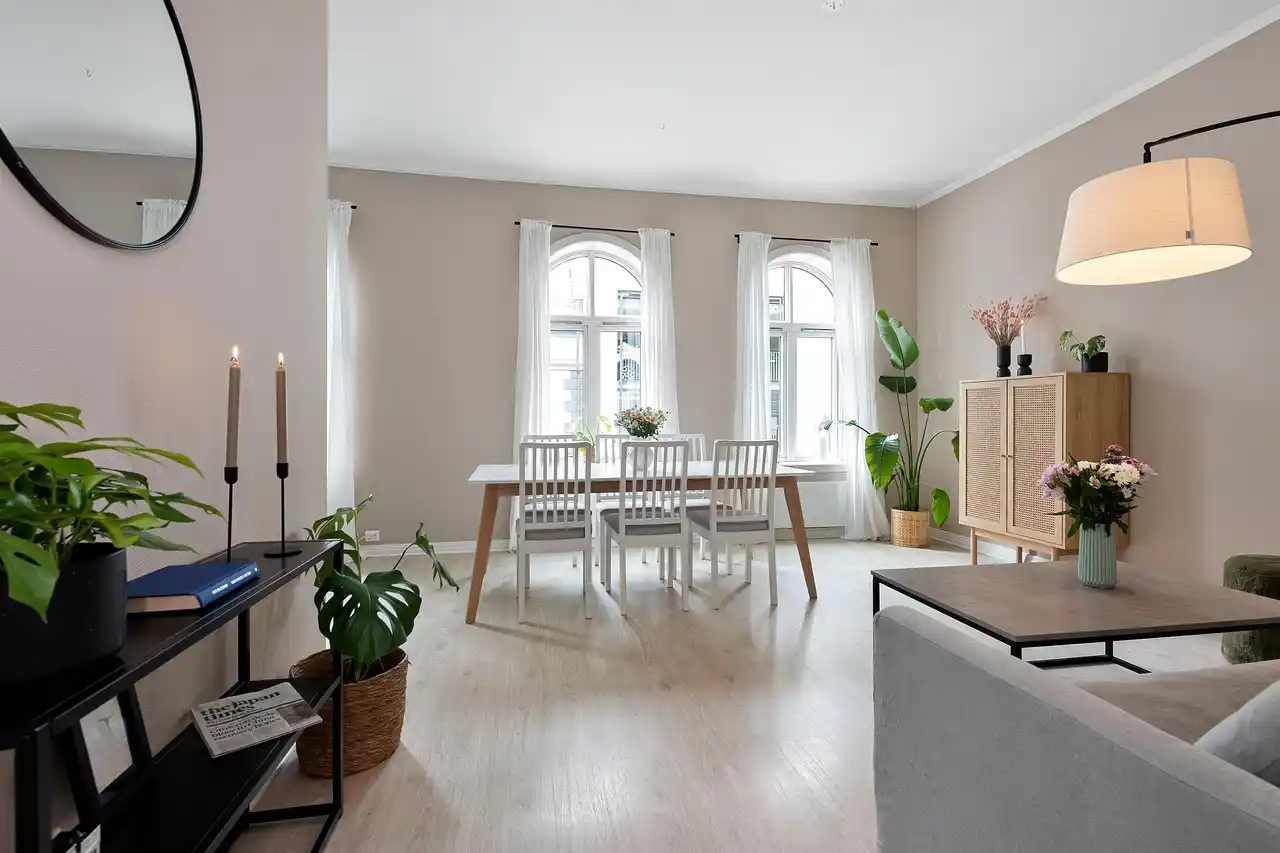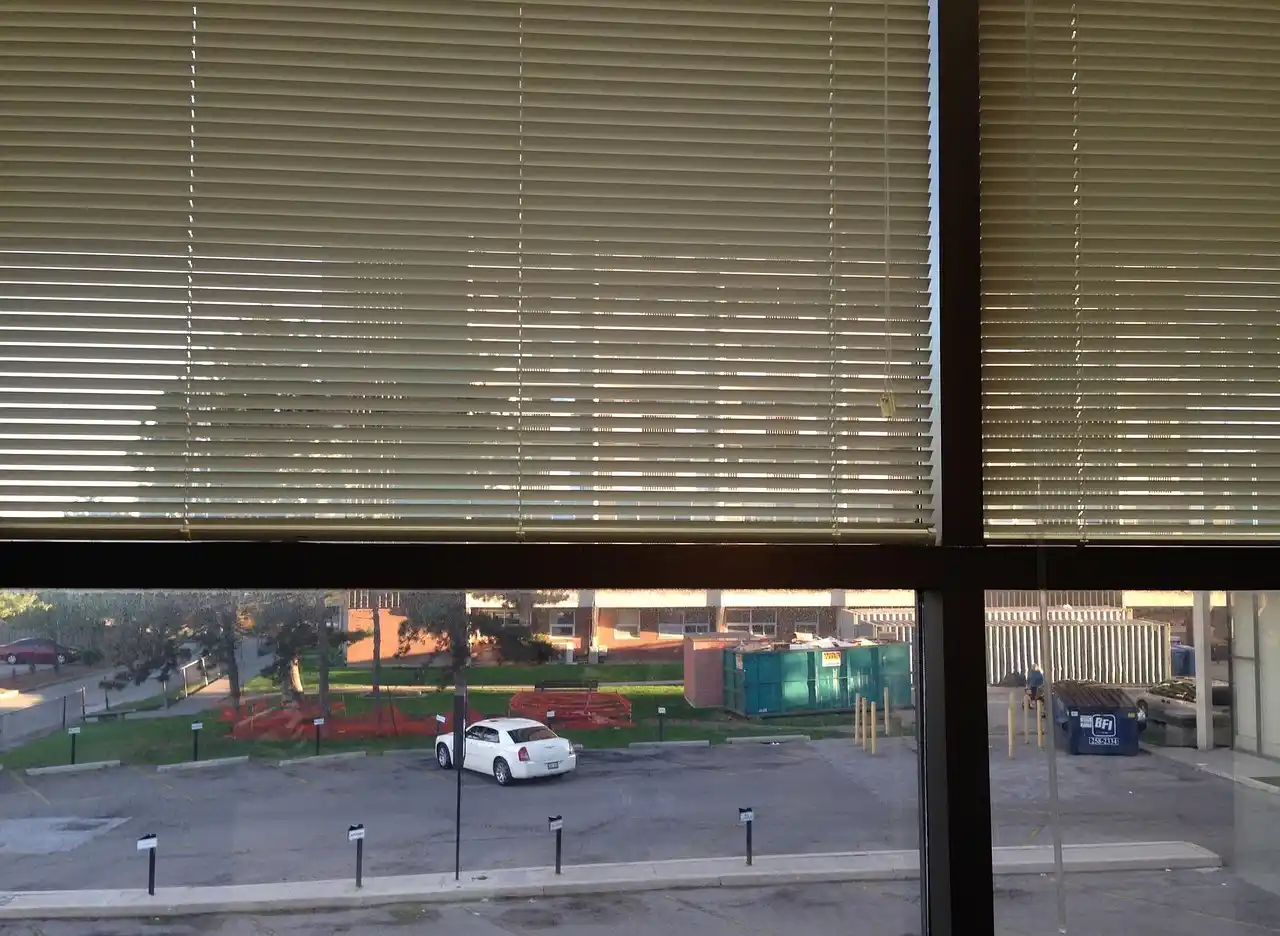
Home window tinting involves applying a thin film to the interior of glass windows to reduce heat, glare, and UV exposure. For homeowners, this simple upgrade can improve comfort, protect furnishings, and lower energy costs.
Benefits of home window tinting
- Energy efficiency: reduces solar heat gain, lowering cooling loads.
- UV protection: blocks up to 99% of harmful UV rays, protecting skin and interiors.
- Glare reduction: improves comfort for screens and living spaces.
- Privacy and safety: makes it harder to see inside and can strengthen the glass against breakage, depending on film type.
- Appearance: offers a consistent, modern look and can preserve natural light with the right tint.
Common types of home window tint films
Dyed window tint
Dyed films are the most budget-friendly option. They absorb heat and reduce glare but can fade over time and may not offer the same durability as other types.
Metalized (metallic) tint
Metalized films reflect a portion of the sun’s heat and provide strong glare reduction. They can interfere with electronics and have a distinct mirrored appearance at certain angles.
Ceramic tint
Ceramic films use ceramic particles to deliver high heat rejection and excellent clarity without metal interference. They are among the most durable and offer strong UV protection.
Carbon tint
Carbon films suppress infrared radiation while maintaining a natural, non-reflective look. They typically hold color well and don’t interfere with electronics.
How to choose the right tint for your home
Consider climate, orientation, and privacy needs. A higher Visible Light Transmission (VLT) lets in more daylight, while lower VLT values reduce heat more—at the cost of less natural light. Regulations vary by region, so check local codes and homeowner association guidelines. For homes with large southern exposures, a ceramic or carbon film often delivers the best balance of heat reduction and clarity.
Professional installation vs DIY
Professional installation ensures a clean, bubble-free finish and can preserve warranties. DIY kits exist but require meticulous surface prep, squeegeeing, and precise cutting. If you’re unsure, hiring a licensed installer is worth the investment to avoid costly mistakes. Look for certified installers, manufacturer-backed warranties, and transparent quotes to reinforce trust and EEAT.
Maintenance and care
Clean glass with non-abrasive cleaners and soft towels. Avoid ammonia cleaners on tinted film, as they can degrade the coating over time. Address any bubbling or peeling promptly by consulting the installer or manufacturer’s warranty terms.
Cost, ROI, and lifespan
Prices vary by film type and window size, typically ranging from modest to premium. Most residential films offer 10–20 years of protection, with ceramic options lasting longer and maintaining color. Energy savings accumulate over time, often balancing the initial investment and providing improved comfort year-round. When comparing quotes, consider warranty length, installation quality, and the film’s performance data from reputable manufacturers.
Comparison of tint types
| Tint Type | Heat Reduction | UV Blocking | Visibility from Inside | Durability | Price Range | Best For |
|---|---|---|---|---|---|---|
| Dyed | Low–Moderate | Up to 99% | Good | Low | $ | Budget heat and glare control |
| Metalized | Moderate–High | Up to 99% | Moderate glare; may reflect | High | $$ | High glare reduction, privacy |
| Ceramic | High | Up to 99% | Excellent clarity | Very high | $$$ | Best overall performance |
| Carbon | Moderate–High | Up to 99% | Non-reflective | High | $$ | Color stability and natural look |
Conclusion
Investing in home window tinting can deliver measurable benefits in comfort, protection, and energy efficiency. By understanding tint types, choosing the right VLT, and opting for professional installation, homeowners can maximize return and maintain a clear view of the outside world. Regular care and awareness of local regulations will ensure the film performs well for years to come.